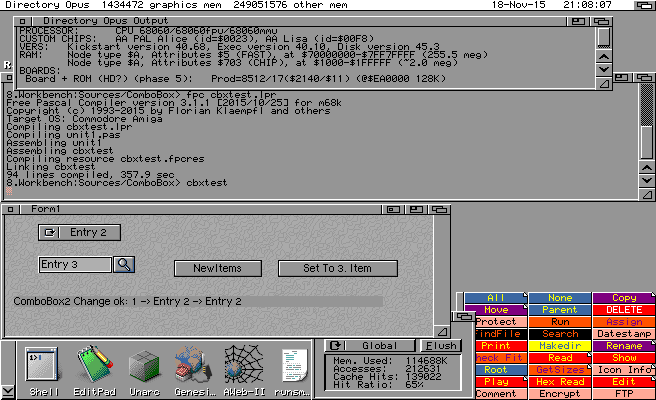
I got my two 128 MB EDO RAM pieces for my Blizzard 1260 (with SCSI Kit), therefore I have now 256 MB RAM. Why I need so much RAM, easy, even a very simple LCL Program need more than 150 MB RAM to compile, of course I can compile in UAE but thats not the same 😉 Ok it needs 5 minutes to compile, but who cares, it works.
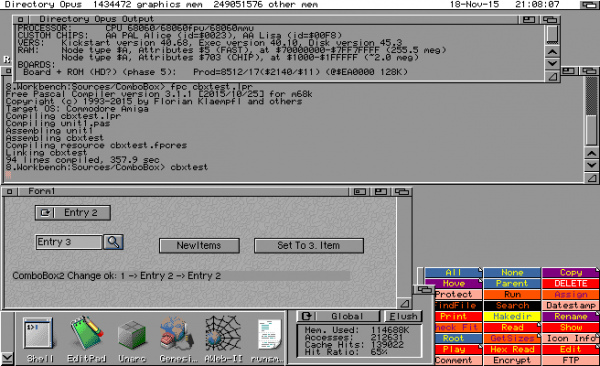
Compile a LCL program on a native Amiga
The flickering is much better, the picture was painted too often and the message loop was polled too seldom. Optimized this a little bit, now it happens very seldom. When I started this tests first I implemented a simple Speedtest which does the same calculation for one second and then count the successfully calculated pixels.
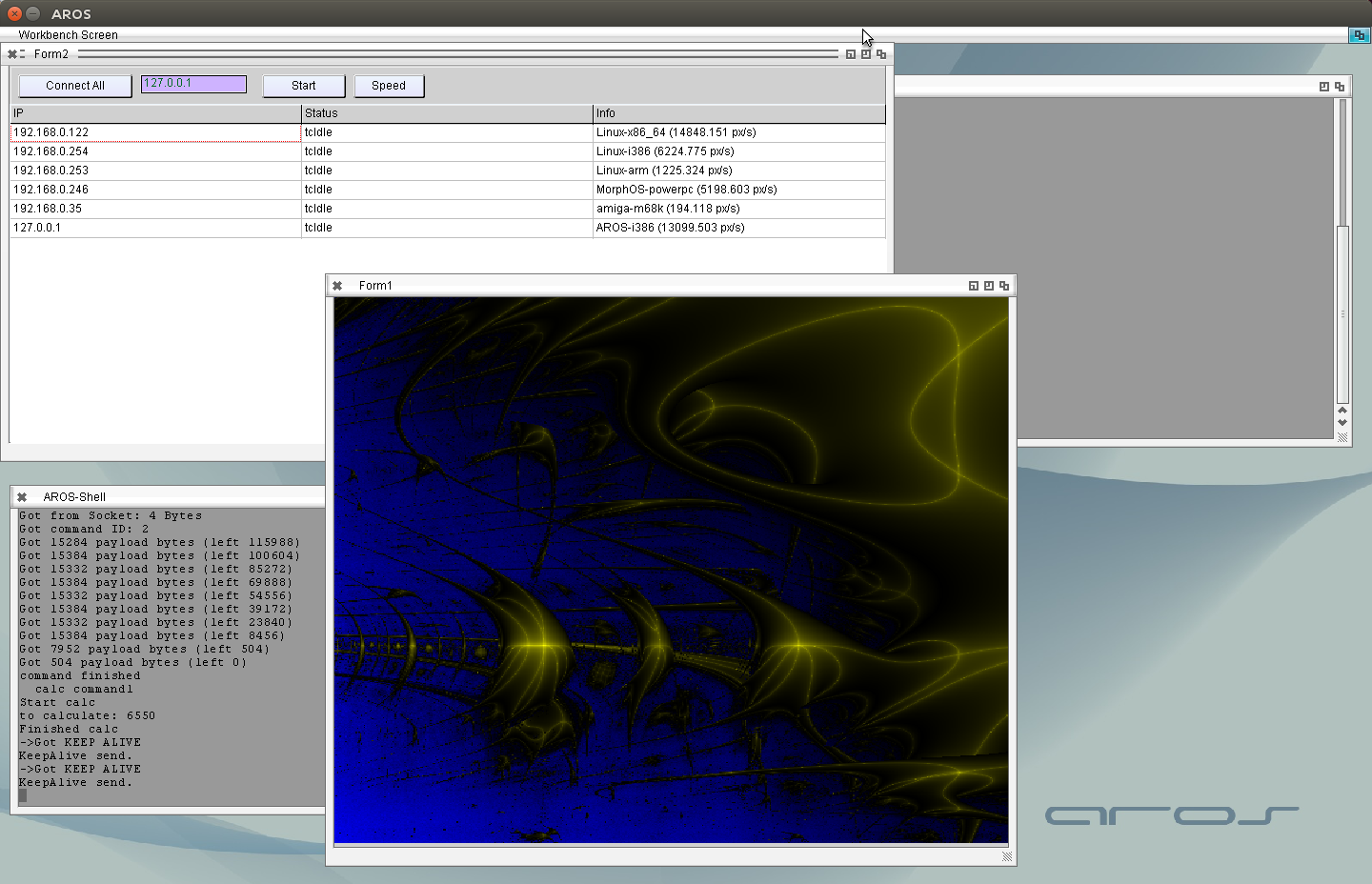
So of course would be nice to have it also in this graphical server and optimize the number of pixels requested from each client. I noticed the Amiga 1200 with 68060 50Mhz only finished 3-4 Pixels per second, I know it is slow, but that slow. (Besides this I’m surprised how fast the MacMini with MorphOS is, nice :-)) But then I remembered that the m68k freepascal does not use the FPU. By default it uses softfloat routines, which of course are very slow. But my automatic compiler server also compiles the FPU version of all units (enable at compiler with -Cf68881 and use FPU compiled units). The fpu compiled version is much, much faster now 200 px/s. Wow now the amiga really add some pixels to finished image. (Before also some, but less than a line ;-))
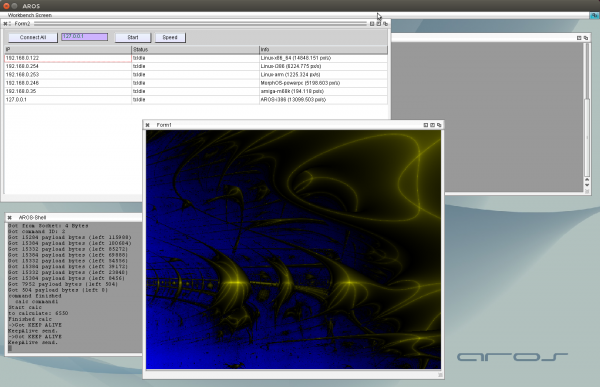
Speed test of the „Amiga Cluster“
It should be noted that the 192.168.0.122 (and 127.0.0.1) is a Computer with eight cores but only one is used here (in fact, two because 127.0.0.1 is AROS hosted on the same computer), I didn’t implement multicore threading.
I played again a little bit with networking things, especially on different platforms. Very nice that the most sources now compile out of the box at Linux, AROS, Amiga and MorphOS only very little ifdefs inside, and even they could be omitted by extending the Amiga-like-RTLs with some unix functions.
I wrote a little Lyapunov calculation program which sends the pixels to calculate via network to other computers to let them calculate. Lyapunov is very good for such things because it has very little inputs and results but rather long calculation time per point.
I compiled and run the client for all platforms I have available currently:
- i386-AROS (Linux Hosted – AMD FX 8120)
- powerpc-MorphOS (Mac Mini)
- m68k-amiga (Amiga1200 68060/50)
- x86_64-linux (AMD FX 8120)
- i386-linux (Intel Atom 230)
- arm-linux (Raspberry pie 1)
All compiled from the same source.
The Server and Image Viewing is done at AROS.
The power of Freepascal/Lazarus at its very best.
The white pixels are already send to some client but the result is not arrived.
The image is flickering a little bit (therefore in the movie sometimes no image to see) because I didn’t care much about the image plotting. I’m not sure why the image is flickering maybe the network communication take too much time so not enough time to draw the image.
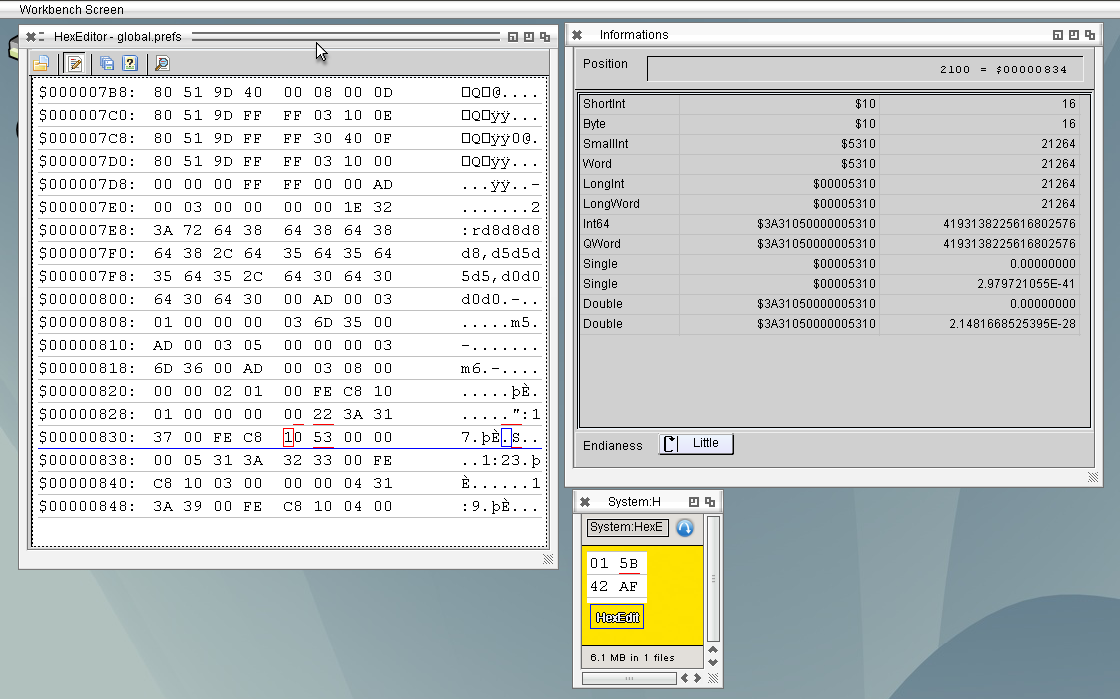
The Hex Editor slowly gets into shape. Most important function, editing and Value showing. The Value is automatically showed in different types (as Byte, Word, LongWord, QWord) and even more important both endian styles(Big / Little). Later will insert also a function to insert a value as the combined types in both endian styles. For now I only need it for small files, so I load the complete file to RAM and then show it. Later maybe I make a viewer version for very big files, which work directly on Harddisk. But at the moment its not needed.
HexEdit 0.2
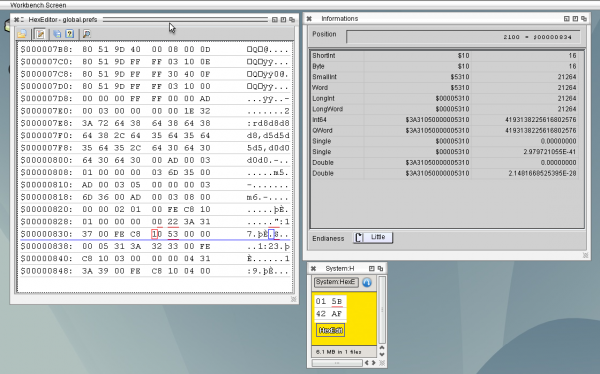
HexEdit 0.2
At the moment I need a HexViewer and sometimes also a HexEditor but even at Linux I’m not very satisfied with the functions with the available HexEditors. So I decided to write my own, of course I write it for Linux/Windows (there I need it) but now I always care about that it will also work for AROS. So I compiled it for AROS as well and it worked without any additional actions. At the moment its just a HexViewer. (use cursor keys for move the cursor, page up down to scroll a page, home and end jump to start/end, Tab change binary part to char part)
But I need Editing, search and replace and jump to special positions.
HexEdit 0.1
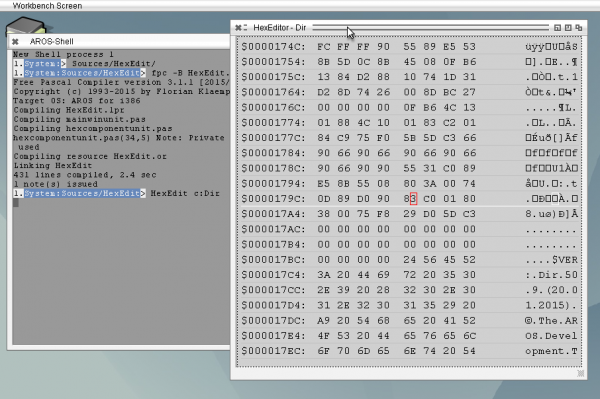
HexEdit 0.1
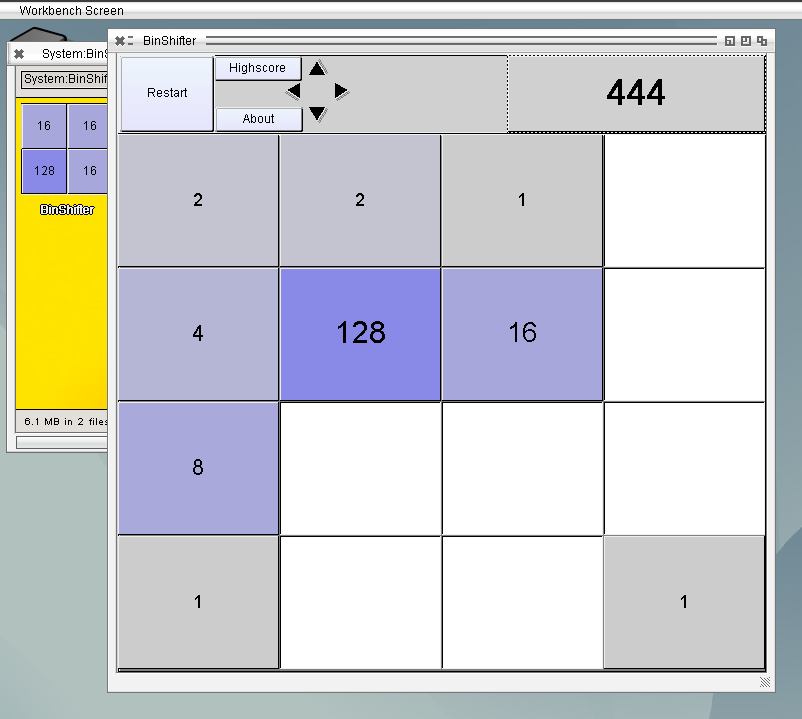
I played a while ago a funny tiny game on my phone called 2048, really easy concept but makes fun to play. So I wrote an own game for AROS which is inspired by it really easy and nice to program.
Its called BinShifter Bin because of Binary numbers which results from it and shifter because you have to shift the blocks around. With the arrow buttons or cursor keys you shift all blocks to one
direction. If two blocks with the same number are stacked in this direction they are added together and you earn points. The maximum number for one block is 4096 (like the numbers of colors
of the original Amiga ;-)). The game ends when no movement is possible.
BinShifter 1.0 i386-aros
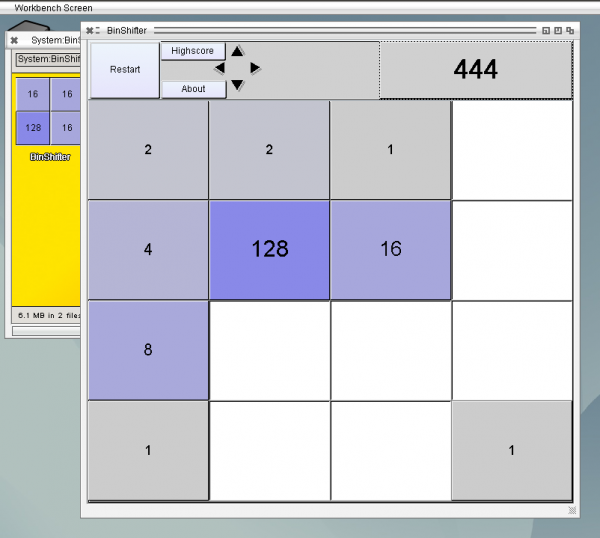
Bin Shifter 1.0
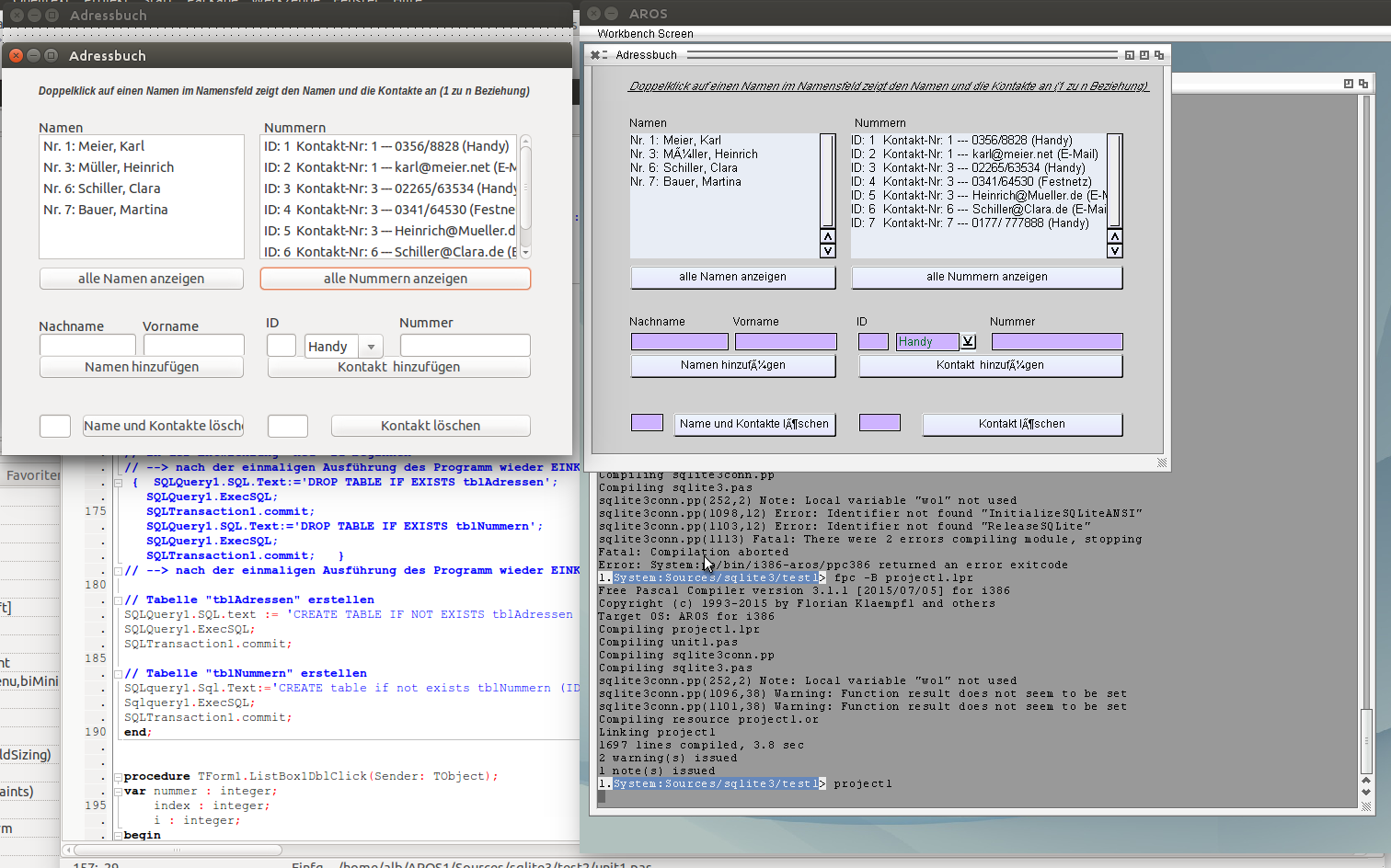
Worked a little bit more on the sqlite3.library for AROS to use in freepascal. Its more or less only diligent working, and take care not to mix up anything. I didn’t include all the functions only the most important until now (at least what I think is most important) until now its already 106 functions inside the library.
Now I tried some test codes… the one from fpc directly are rather boring, even less impressive than my own examplecode.
But I found a german Tutorial how to use databases in Lazarus, with some tiny changes in in Lazarus component it compiles really nicely and works as expected.
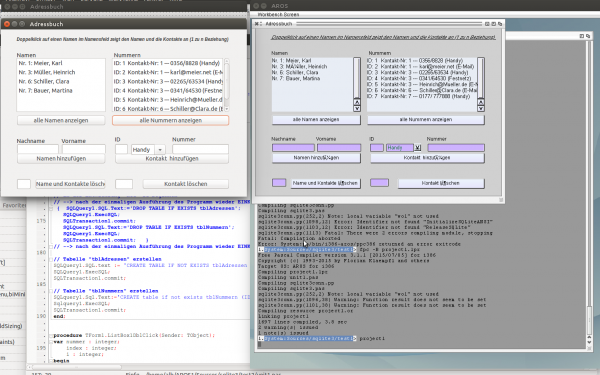
SQLite3 freepascal example program
Left side Linux, Right side AROS.
Played around a little bit with graphics and game mechanics. Result is (until now) a Pipe-like game just for fun.
The SynFacialHighlighter seems not to work on AROS, because no WideStringmanager is available, one way would be to write a Widestring manager (maybe would be good idea to do so also for the basic Freepascal implementation) or search for a different customizable highlighter. I found already one (included in Lazarus) SynUniSyn. The main problem is that this is just a very basic port from the delphi SynUniSyn and the original SynUniSyn is very hard to find (at least the original Pages are down, and sourceforge and so on are empty), so no Highlighter example files available. But I found a very old source of an editor wich have in an older repository version the sources and 311 (!!) Highlighters included.
So it works, also on AROS, maybe some tiny changes must be done, for example the C++ highlighter turns everything into uppercase. But this could be done I think, I will play a little bit with it.
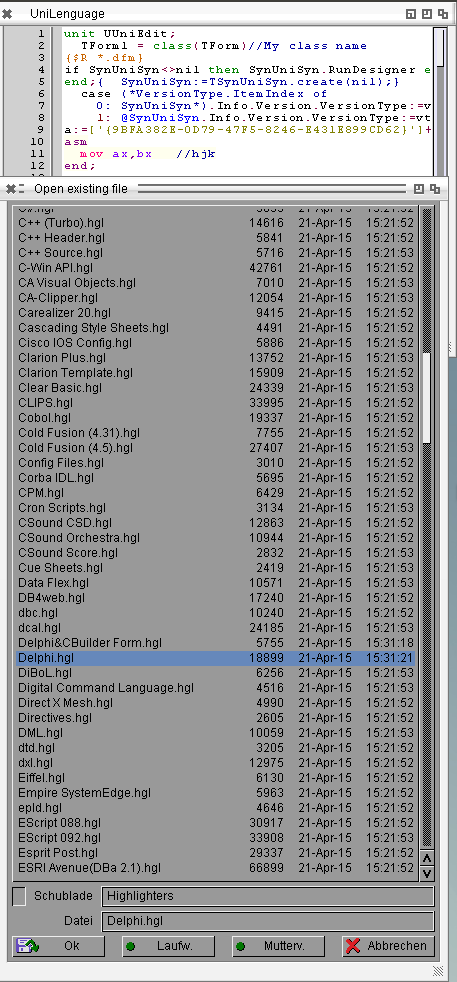
Source at Github
Binary AROS i386
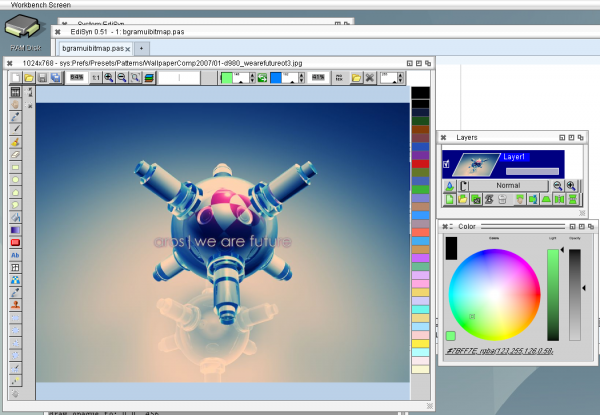
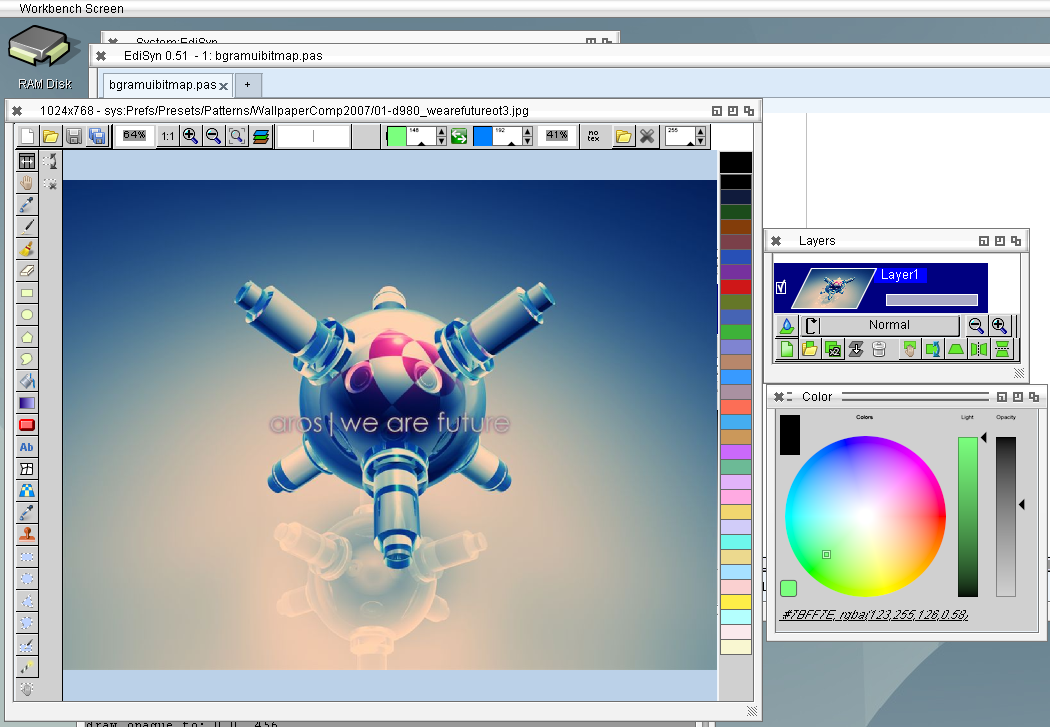
Finally go LazPaint somewhat working, yesterday was just with many dummy functions in the bgrabitmap package. Today I wrote some implementations of this. It works, but it is VERY slow, because the drawing functions like WritePixelArray are very slow when drawing to a ARGB Screen. Maybe a clever conversation before will improve it. the other thing: it crashes very often, mostly List exceptions, I’m wonderring if thats the same as I got for EdiSyn, some fonts are too small to read.